Sleeping hot has a way of making people feel strangely defective, as if everybody else received a better body at checkout. Usually the problem is not your body. It is the fabric wrapped around it for eight hours every night.
Linen solves that problem better than almost anything else you can put on a bed. Not because it is trendy, and not because hotels figured out how to market it. Because flax fibers breathe, release heat, and dry fast. The material has known what to do for a very long time.
The only complication is quality. Good linen feels airy, textured, and progressively softer. Bad linen feels punitive, as though someone confused roughness with honesty.
What makes linen sheets good for heat
Linen is breathable in a structural way, not a marketing way. The fibers are thicker and the weave leaves enough room for air to move through. Heat escapes instead of getting trapped beside your skin.
It also handles moisture better than cotton. If you sweat, linen pulls that moisture off the body and lets it dissipate. Cotton tends to hold on, which is why you wake up feeling warm and vaguely annoyed even when the room itself is fine.
Weight matters too. For hot sleepers, look in the 155 to 185 gsm range. That is where you get airflow without the fabric feeling flimsy. Heavier linen can be beautiful, but it is not always the move if your main issue is heat.
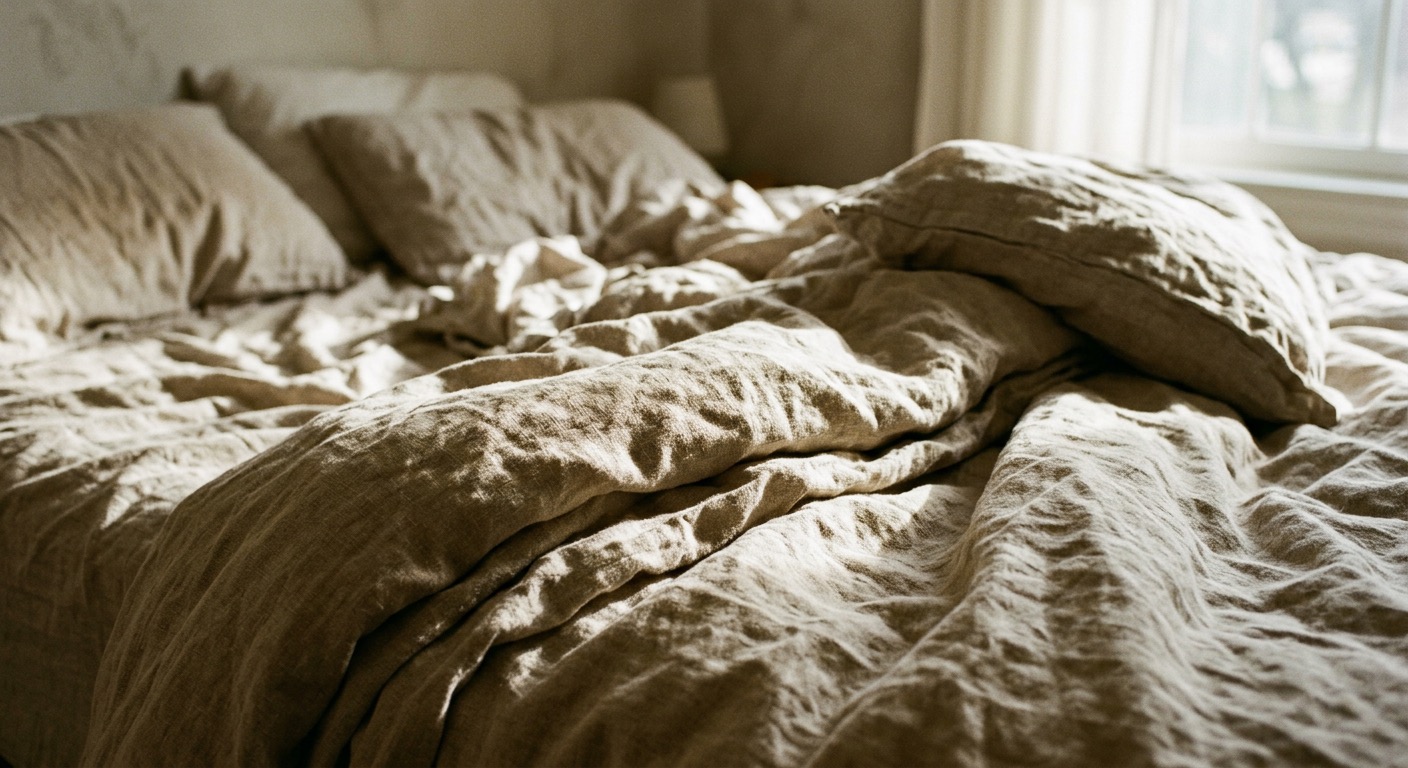
European flax, pre-washed softness, weight that feels substantial without trapping heat. The set most people should start with.
Shop Parachute →Parachute Linen Sheet Set
Parachute is the benchmark because they get the basics right. European flax, pre-washed finish, a hand-feel that starts soft and keeps going. The sheets breathe, drape well, and do not require a long apprenticeship before they become pleasant.
The colors help too. Muted, room-friendly, nothing likely to embarrass you next year. This matters more than people admit, because a bed is too large a surface to get sentimental about a trend on.
Coyuchi Organic Linen
Coyuchi is the move if organic sourcing matters to you and you like your linen to feel a little more like linen. Slightly airier weave, slightly more texture, very good breathability in warm rooms.
If Parachute is the easiest first recommendation, Coyuchi is the one for people who already know they enjoy a more honest fabric with a little grain to it.
Cultiver Linen
Cultiver earns its place through color and finish. The linen arrives already soft, the drape is easy, and the palette has some mood in it. Terracotta, olive, dusty rose, all the shades that make a bed feel considered rather than merely coordinated.
The quality holds up. It is not style over sleep.
What to look for when shopping
Start with the flax source. European flax tends to be the safest bet, especially from Belgium, France, and Lithuania. Longer fibers usually mean a softer, more durable finished fabric.
Pre-washed or stone-washed linen gets you to the good part sooner. Raw linen softens with time too, but if you already know you want comfort from night one, skip the waiting period.
And avoid linen blends if breathability is the whole reason you came. A cotton-linen blend may be cheaper, but it also drifts away from the main point of linen in the first place.
Stone-washed European flax with a better-than-average color story. For people who want the bed to feel cool and look intentional.
Shop Cultiver →Care and longevity
Linen is easier to live with than its reputation suggests. Wash it warm or cold, dry it low, and let the wrinkles stay if they want to. Linen looks best when it is allowed to look like linen.
A good set can last close to a decade. Spread across actual nights of sleep, that price becomes a very reasonable argument for buying once instead of bargaining with discomfort forever.